Intraoral scanner: what it is and why it replaces impression putty
An intraoral scanner creates a 3D model of your mouth in minutes, with no putty or trays. Learn how it works, its advantages and which treatments use it.
 Reviewed byDr. Andreina Armas · Specialist in Oral Rehabilitation and Cosmetic Dentistry4 min read

An intraoral scanner is a device with a small camera that travels over your teeth and gums and builds, in real time, an exact three-dimensional model of your mouth. It replaces traditional tray-and-putty impressions.
How does it work?
The scanner tip projects light onto the teeth and captures thousands of images per second. Software stitches them into a 3D model shown on screen as scanning happens. The whole process takes a few minutes.
Digital scan vs. putty impression
| Intraoral scanner | Traditional impression | |
|---|---|---|
| Comfort | No putty or trays | Material in the mouth for several minutes |
| Gagging | Rare | Common in sensitive people |
| Time | A few minutes | Longer, with possible retakes |
| Correction | Only the needed area is rescanned | The whole impression is repeated |
| Sending to the lab | Instant digital file | Physical transport |
| Record | Stored | Plaster models deteriorate |
What are the advantages for you?
- More comfortable: no tastes or choking sensation.
- More precise: restorations that fit better and need fewer adjustments.
- Faster: the lab receives the file instantly.
- More visual: you see your mouth in 3D and understand the diagnosis better.
- Tracking: scans can be compared over time to measure wear or movement.
Does it emit radiation?
No. It works with visible light and can be used as often as needed.
Which treatments use it?
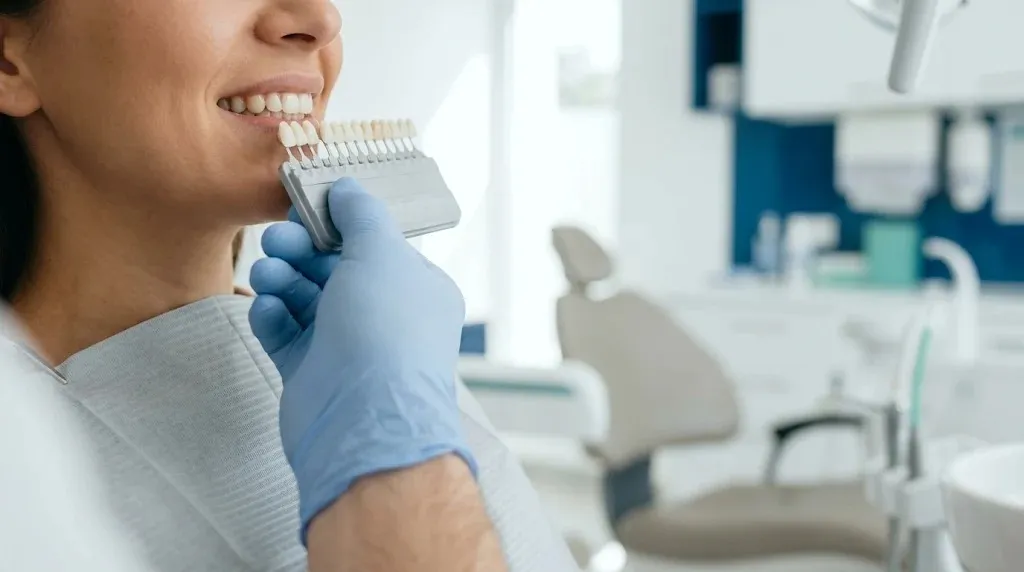
- Porcelain veneers and crowns.
- Implant prostheses.
- Night guards for bruxism.
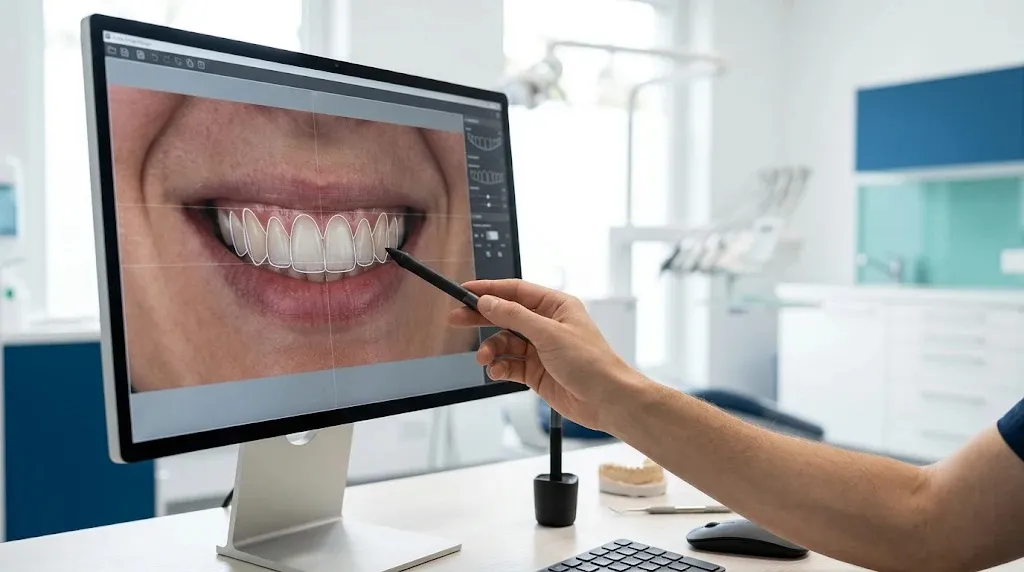
- Digital smile design and mock-ups.
What happens after the scan?
The model is used to design the restoration on a computer (CAD) and manufacture it by milling or 3D printing (CAM). This workflow, called CAD/CAM, is the basis of 3D digital dentistry.
If traditional impressions have kept you away from the dentist, today’s technology makes the experience far easier. Book your evaluation with Dr. Andreina Armas in Bogotá.
Frequently asked questions
Does an intraoral scanner replace X-rays?
No. The scanner records the surface of teeth and gums; X-rays and CT scans show bone and roots. They complement each other.
Is it suitable for people with a gag reflex?
Yes. That is one of its biggest advantages, since it avoids the putty-filled trays that often trigger gagging.
Is scanning more accurate than a traditional impression?
For most restorations it offers equal or better accuracy, and removes errors caused by material distortion.